After 3 years of algo trading and hundreds of backtests, here's why 90% of backtests you see online are misleading:Survivorship bias: you test on stocks that still exist. The ones that went bankrupt are excluded. Inflates returns.Look-ahead bias: using data that wasn't available at the time of the trade. Even split adjustment can cause this.Overfitting: 20 parameters optimized over 10 years = perfect curve, catastrophic real performance.Slippage ignored: "I made 200%" — with perfect fills at mid-price that you'll never get in reality.Transaction costs: commission + spread + market impact. On a high-frequency algo, it changes everything.Data snooping: testing 50 strategies and keeping only the best one. Probability it works forward: close to zero.Regime change: what worked in 2015-2020 (infinite QE, zero rates) doesn't work in 2024-2026 (high rates, inflation).
Built a mean reversion bot on ETH/BTC and SOL/BTC pairs. Running for 8 months on Binance.LogicThe ratio between two cryptos tends to revert to its mean. When the 20-day z-score exceeds +2 or -2, I take the opposite position.Results (8 months, $20K)Total return: +18.4% ($3,680)Sharpe: 1.2Max drawdown: -6.8%Win rate: 63%Number of trades: 142Stack: Python, ccxt, PostgreSQL, Grafana for monitoring. Code is on my GitHub (link in comments).
I keep hearing about quant trading and algorithmic strategies but I can't figure out what it actually IS in practice. Is it just writing programs that trade for you? Do you need a PhD in math? Can a self-taught programmer build profitable quant strategies?I know Python decently (data analysis, pandas, some ML) and I've been trading manually for 2 years. Wondering if I should try to automate some of my strategies or if quant trading is a completely different world.
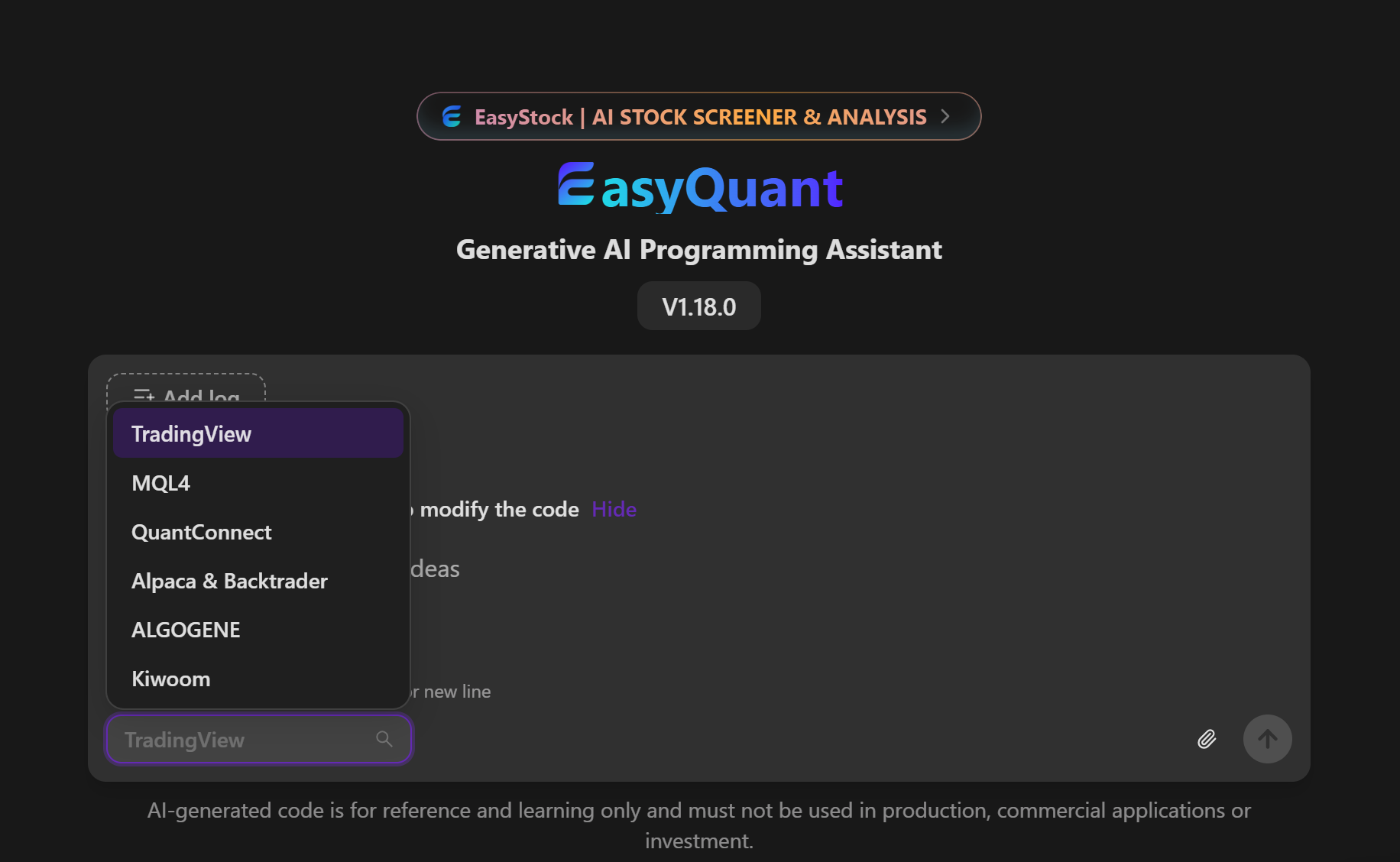
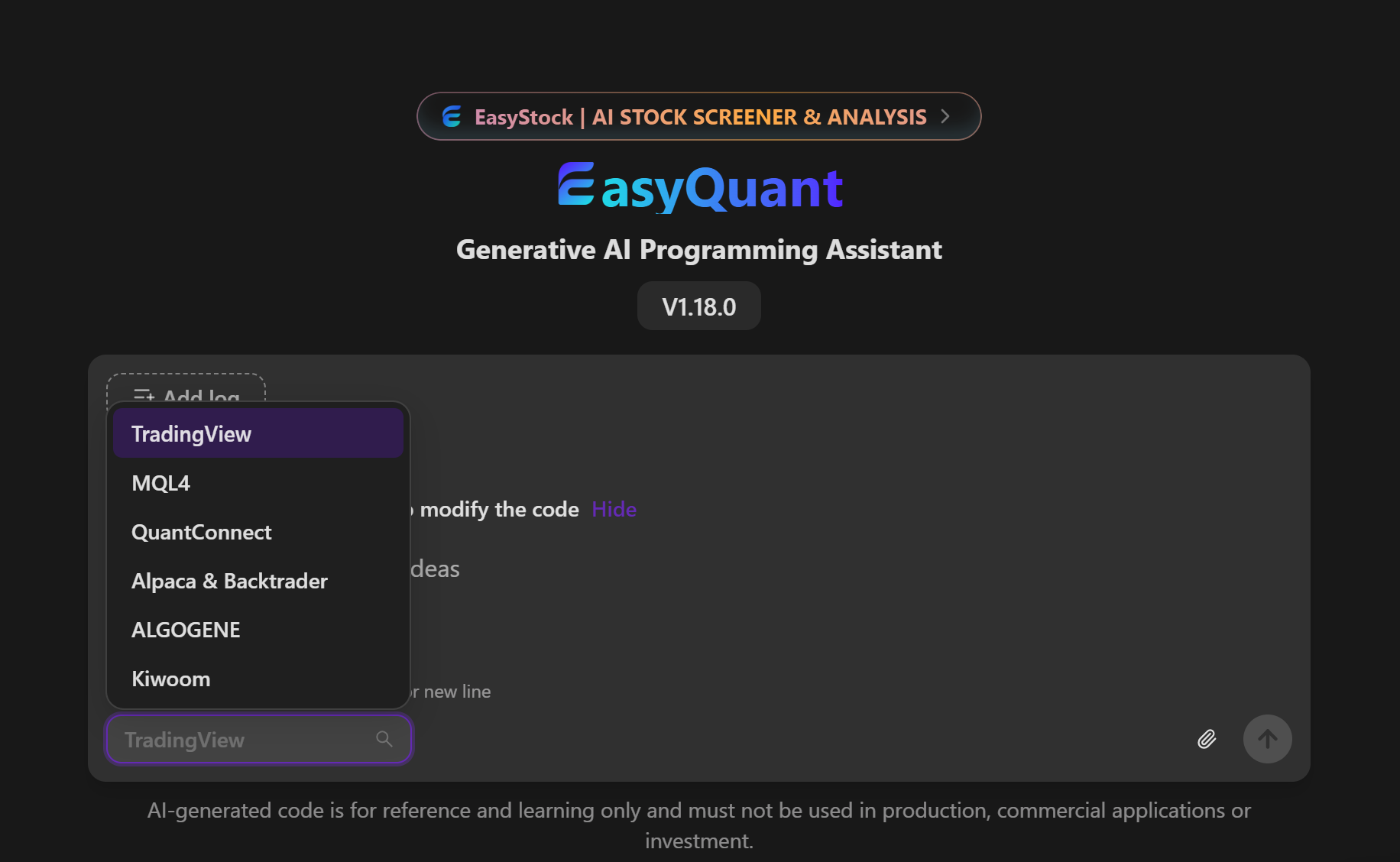
If you have a trading idea you want to test on TradingView but need help writing Pine Script, you can try EasyQuant. You describe the rules in plain language, and it helps turn them into strategy or indicator code. It can also explain and revise existing scripts. When describing your idea, include the entry, exit, timeframe, and position-sizing rules so the generated code is less likely to interpret your idea differently. You still need to check and test the code yourself; generating a script does not mean the strategy will be profitable. Feedback on where coding becomes difficult is also welcome. https://tradingviewai.dev
Disclosure: I am promoting EasyQuant.“Buy when the trend turns up” leaves too much open. You still need to decide which indicator defines the trend, when the signal is confirmed, and what closes the position. EasyQuant is an AI coding assistant that helps turn trading ideas into TradingView Pine Script, including entry conditions, exits, and risk-management rules. The clearer the rules, the easier it is to refine the script. The important part is to inspect and test the rules: check that the code implements your logic, then review the backtest assumptions and results. AI-generated code can contain mistakes, and a backtest does not guarantee future returns. Feedback on how well the generated code matches your strategy description is welcome. https://tradingviewai.dev